⛰️ 15 Landscaping On A Hill
So, you’ve got a hill. Not just a gentle slope, but a hill. Most folks see a challenge; we see an invitation for some serious curb appeal (and maybe a little light cardio). Ditch the flat-earth mentality and let’s turn that incline into an asset. Your yard is about to get a glow-up, literally up a hill. Forget fighting gravity; we’re making it work for us.
1. Terraced Gardens
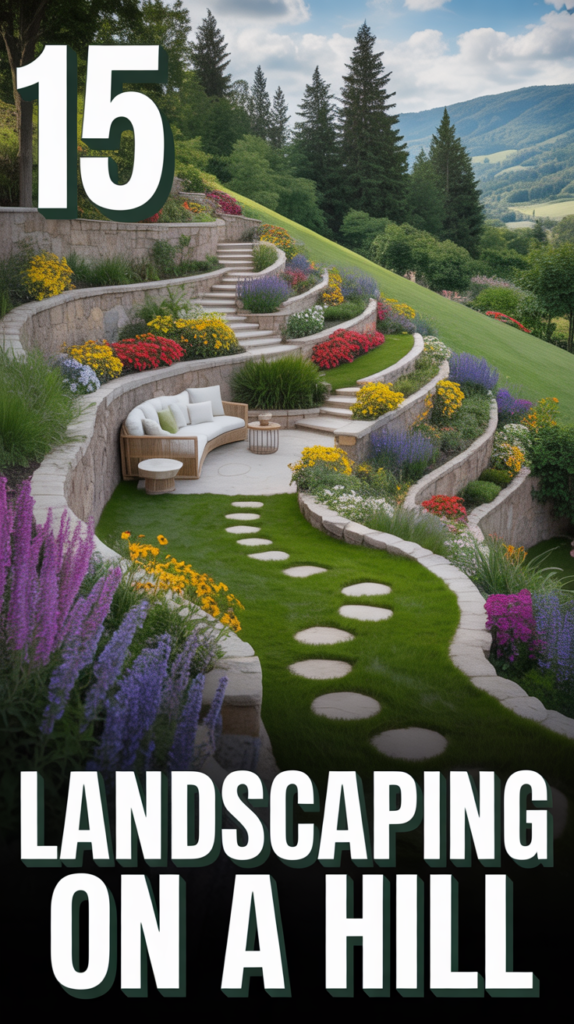
Oh, the classic. You’ve got a hill, you make it look like a giant, beautiful staircase. It’s practical, it’s pretty, and it stops your topsoil from taking a vacation down the street. Each level becomes its own little micro-garden, perfect for everything from veggies to ornamental grasses.
This method is amazing for creating flat planting beds on steep grades, making gardening way easier. Pro tip: Use diverse materials for your terrace walls—think reclaimed wood, natural stone, or modern gabion cages—to add serious style. It’s not just about holding dirt; it’s about making a statement. Plus, no more chasing runaway pumpkins.
2. Stylish Retaining Walls
Not just for holding back the apocalypse, modern retaining walls are architectural statements. They create usable, flat spaces and can define different zones in your sloped yard. Think beyond boring concrete blocks; go for texture, color, and design.
These walls are crucial for slope stability and preventing erosion, but they also offer fantastic opportunities for built-in seating or raised garden beds. Pro tip: Consider a tiered approach with multiple shorter walls rather than one massive one; it often looks more natural and is structurally more forgiving. Your hill will thank you for the extra support, and your eyes will thank you for the chic design.
3. Dynamic Rock Gardens
Embrace the rugged beauty of a rock garden. Hills and rocks are practically best friends, right? This option is low-maintenance, naturally beautiful, and totally on-trend for that wild-yet-curated vibe. Plus, rocks don’t need watering, which is a definite win.
They provide excellent drainage and mimic natural mountain landscapes, creating a habitat for drought-tolerant plants like succulents and alpine varieties. Pro tip: Vary the size and placement of your rocks for a more organic, less “someone just dumped a pile here” look. It’s all about creating visual flow, not just piling stones.
4. Groundcover Power
Say goodbye to endless mowing on an incline that makes you question your life choices. Groundcovers are your new best friends. They spread, they cover, and they look fabulous doing it, all while holding that precious soil in place. Think vinca, creeping thyme, or sedum.
These low-growing wonders are perfect for erosion control and suppressing weeds, turning a barren slope into a lush carpet. Pro tip: Choose varieties that are native to your region for the best success and minimal fuss. Your knees (and your mower) will forever be grateful.
5. Native Plants Rule
Who knows how to handle your local climate and soil better than plants that actually grew up there? Native plants are hardy, require less water once established, and naturally thrive on slopes. They’re basically the low-maintenance superstars of the plant world.
They offer ecological benefits by supporting local wildlife and reducing the need for irrigation and chemicals. Pro tip: Group plants with similar water and sun needs together to make maintenance a breeze. It’s like giving your plants a built-in support system.
6. Swales and Rain Gardens
If your hill also comes with a side of drainage drama, these are your heroes. Swales are shallow ditches that guide water, and rain gardens are depressed areas that collect and absorb it. They prevent runoff and turn excess water into a feature, not a flood.
These systems are brilliant for managing stormwater, preventing erosion, and recharging groundwater naturally. Pro tip: Plant your rain garden with moisture-loving native plants that can handle both wet and dry conditions. It’s basically a spa day for your soil and plants.
7. Steps and Pathways
You gotta get up the hill somehow, right? Instead of a treacherous scramble, install beautiful, functional steps and winding pathways. They make your sloped yard accessible and add a huge dose of charm and intention. Think natural stone, wood, or gravel paths.
These elements create safe passage and define circulation, making your entire landscape feel more inviting and organized. Pro tip: Incorporate landings or small patios along longer paths to offer resting spots and new perspectives. Your guests will thank you, and so will your calves.
8. Multi-level Decks or Patios
Why have one flat space when you can have several? Decks and patios built into different levels of your hill create incredible outdoor rooms. Imagine a dining area on one level, a lounge on another, all connected by elegant steps. It’s instant luxury.
They effectively create usable living spaces where none existed before, maximizing your outdoor square footage. Pro tip: Use composite decking or durable pavers for longevity and low maintenance, especially in areas exposed to the elements. Your hill just got a whole lot more entertaining.
9. Strategic Tree and Shrub Planting
Trees and shrubs aren’t just pretty faces; their roots are like natural rebar for your hillside. Planting them strategically helps stabilize the soil, reduce erosion, and adds incredible vertical interest and shade. Choose species with strong, deep root systems.
They provide long-term stability, privacy, and can significantly improve the microclimate of your sloped yard. Pro tip: Plant in staggered patterns or groupings rather than straight lines for a more natural look and better soil retention. It’s like giving your hill a hug from the ground up.
10. Berms and Mounds
Wait, you’re adding hills to your hill? Yes, but with purpose! Berms are elevated mounds that can redirect water, create privacy, or simply add visual interest to a gentler slope. They’re excellent for breaking up a monotonous incline.
These sculpted earthworks are fantastic for shaping the landscape, creating microclimates, and enhancing drainage in specific areas. Pro tip: Incorporate boulders or strategically placed plants on your berms for a more natural, intentional look. It’s like giving your yard a mini-mountain range.
11. Cascading Water Features
Hills and water features are a match made in heaven. Let gravity do the work and create a stunning cascading stream or waterfall. The sound is incredibly soothing, and the visual appeal is unmatched. It’s basically bringing a piece of nature’s symphony to your backyard.
These features add sensory appeal and can help mask urban noise, creating a tranquil oasis. Pro tip: Ensure proper waterproofing and a closed-loop system to conserve water and prevent unexpected floods. Your hill will become the envy of the neighborhood.
12. Erosion Control Blankets (Temporary)
Okay, this one’s less glamorous, but super effective for new plantings. If you’re tackling a bare, steep slope, erosion control blankets (made from straw, coir, or jute) protect young plants and soil until they establish. Think of them as temporary training wheels for your hillside.
They provide immediate protection against washouts and help retain moisture for new seeds or saplings. Pro tip: Pin them down securely and ensure they make good contact with the soil for maximum effectiveness. You’re basically giving your baby plants a cozy, secure start.
13. Vertical Planters and Green Walls
Got a retaining wall that feels a little… plain? Or a small, super steep section you can’t plant conventionally? Go vertical! Attach planters directly to walls or create a full-blown green wall. It’s an instant art installation and a space-saving marvel.
These solutions are excellent for maximizing planting space in tight areas and adding lush greenery where traditional planting is difficult. Pro tip: Choose a drip irrigation system for vertical planters to ensure consistent watering without constant manual effort. Your wall just got an upgrade.
14. Slope-Friendly Seating Areas
Don’t just look at your hill; live on it! Build a cozy bench into a retaining wall, or create a small, level landing with an Adirondack chair. These spots invite you to pause, enjoy the view, and appreciate the unique contours of your yard.
They transform unused sloped areas into functional relaxation zones, adding value and enjoyment to your outdoor space. Pro tip: Orient your seating to capture the best views or offer shade during the hottest parts of the day. It’s all about making your hill work for your comfort.
15. Creative Lighting
When the sun goes down, your hill can still shine. Strategic lighting can highlight your terraces, illuminate pathways, and accentuate unique plantings. Think low-voltage path lights, uplights for trees, or even solar-powered accent lights. It adds magic and safety.
Lighting extends the usability of your outdoor space and enhances safety and aesthetics after dark. Pro tip: Experiment with different light temperatures and beam spreads to create depth and drama. Your hill is about to become a nighttime masterpiece.
Conclusion
So, there you have it. Your sloped yard isn’t a problem; it’s a playground of possibilities, a canvas for creativity, and probably the most interesting yard on the block. Ditch the fear of gravity and embrace the up side of things. Go forth and conquer that incline, you magnificent landscape architect, you!