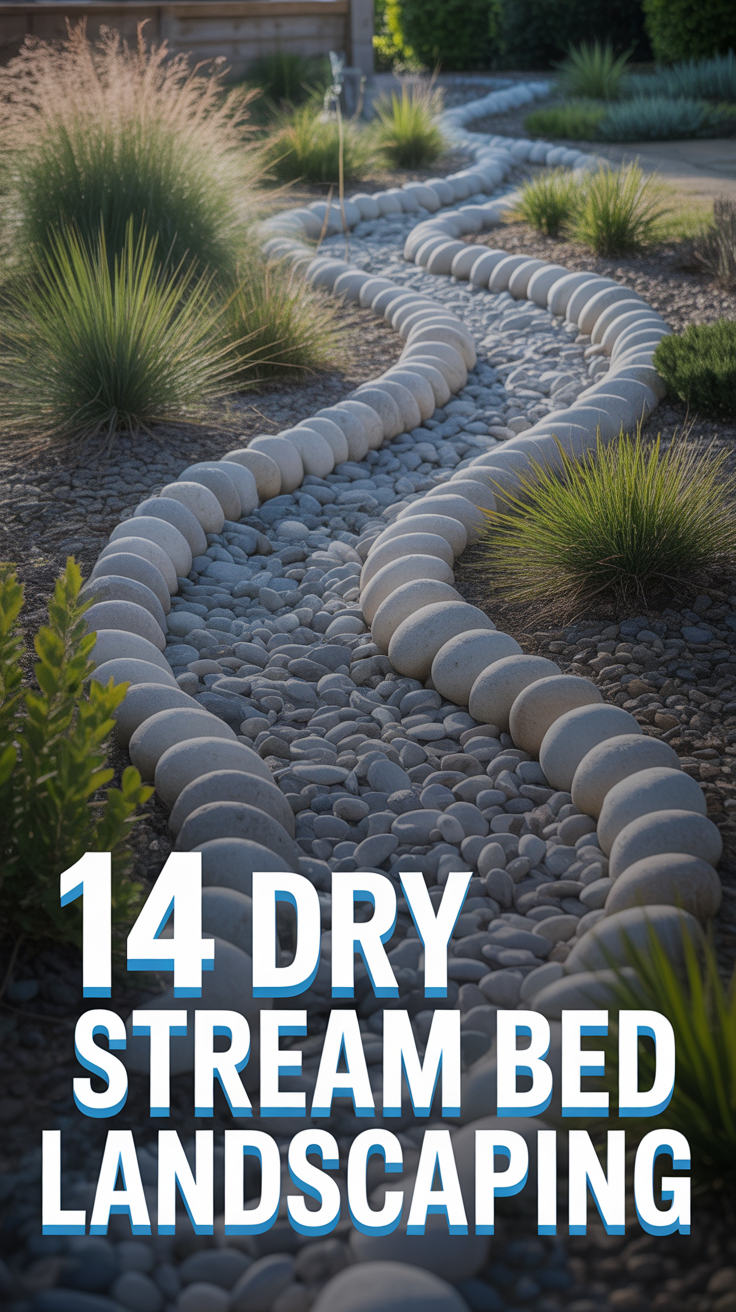
🌊 14 Dry Stream Bed Landscaping
Okay, let’s be real. We all want a stunning yard that makes the neighbors subtly jealous, but who has time for constant watering, weeding, and crying over crispy plants? Not us, friend. Enter the dry stream bed: your new secret weapon for a gorgeous, low-fuss landscape. It’s basically a river without the commitment, a drainage solution that’s actually chic, and a whole lot of creative fun. Forget the endless battle with a garden hose; we’re talking about embracing the beauty of natural stone and clever design. Ready to ditch the drama and design a masterpiece? Let’s dive in.
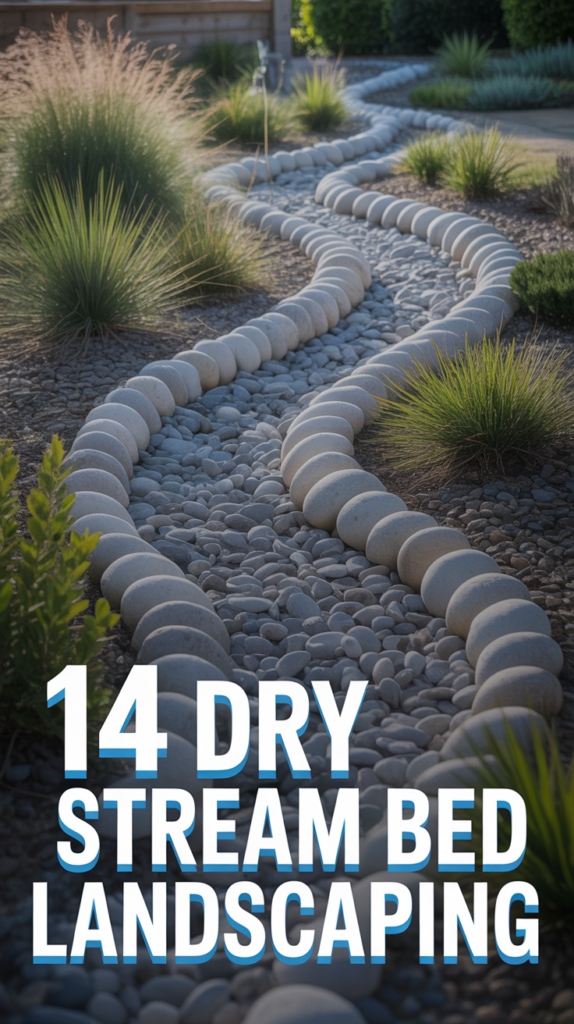
1. The Gentle Curve Quest
Straight lines? So last season, and frankly, a bit boring. Your dry stream bed isn’t a ditch; it’s an artistic expression. Think natural riverbeds, with soft, meandering S-shapes that invite the eye to wander. It adds instant charm and makes your garden feel way more established.
Pro tip: Map out your desired curves with a garden hose or spray paint first. It’s easier to adjust before you start hauling rocks. This approach looks organic and totally avoids that “random pile of rocks” vibe.
2. Rock On with Variety
One size fits all? Nah. Your stream needs personality, and that comes from a mix of textures and dimensions. Mix up cobbles, smaller pebbles, and a few larger boulders. Different colors and textures add incredible depth and make it look like nature actually put it there.
Pro tip: Place your biggest, most impactful rocks first, then fill in around them. It’s like building a puzzle, but way more satisfying. This creates a dynamic, visually rich texture that’s anything but flat.
3. Bridge the Gap (Literally)
Who needs actual water to cross a bridge? Adding a small, decorative bridge over your dry stream bed is pure genius. It adds a whimsical touch, creates a sense of journey, and instantly becomes a focal point. Choose wood, stone, or even a rustic metal.
Pro tip: If you plan on actually walking over it, make sure it’s sturdy and properly installed. Otherwise, it’s just a pretty prop. A bridge makes the space feel bigger and adds an unexpected architectural element.
4. Plant Power Pockets
Greenery without the drama? Yes, please. Nestle drought-tolerant plants like hardy succulents, waving ornamental grasses, or fragrant lavender along the edges or in small pockets within the bed. They soften the hardscape and add a much-needed pop of life.
Pro tip: Choose plants with similar water needs to keep maintenance super simple. This softens the edges, adds vibrant color, and blends your stream seamlessly into the surrounding landscape.
5. The Grand Boulder Statement
Go big or go home, right? A few well-placed, significant boulders create a naturalistic feel and really anchor your design. Think of them as the sculptural elements of your dry stream bed, giving it gravitas and a sense of permanence. They’re basically garden royalty.
Pro tip: Bury them slightly into the ground for a more established, “always been there” look. This adds weight, drama, and makes your stream feel like a natural feature, not an afterthought.
6. Light It Up, Buttercup
Your dry stream bed shouldn’t vanish at dusk. Integrate solar lights or discreet low-voltage path lighting along the banks. It highlights the texture and extends its beauty into the evening, turning your yard into a magical nighttime retreat.
Pro tip: Test light placement at night before final installation to get that perfect glow. This transforms your landscape after dark, making your stream a captivating feature 24/7.
7. The “Source” of Inspiration
Every great stream needs a beginning, even a dry one. Create a clear “source” point – perhaps a cluster of larger rocks, an artful urn spilling out pebbles, or a small mound. This is where the magic (or the rain runoff) starts its journey.
Pro tip: Make the source slightly elevated to enhance the illusion of water flowing downhill. It gives the stream a logical starting point and visual anchor, drawing the eye right in.
8. Edge Control Excellence
Boundaries are good, even for streams. Define the stream’s edges with slightly larger rocks, stacked stones, or even a subtle border of low-growing plants. This contains your gravel, prevents spillover, and gives a polished, intentional finish.
Pro tip: Use an edging material that complements your overall landscape and house style. This keeps things tidy, prevents gravel migration, and ensures your stream looks perfectly manicured.
9. Zen Zone Raking
Who needs a beach when you have a dry stream? If you’re using fine gravel or sand, consider raking patterns into sections, mimicking a Japanese Zen garden. It’s surprisingly meditative and adds an unexpected layer of artistry to your yard.
Pro tip: Keep a small rake handy for touch-ups after a windy day or curious critters. This adds an unexpected layer of artistry and tranquility, inviting a moment of calm reflection.
10. The Illusion of Wetness
Tricking the eye is half the fun. Use darker, smoother river stones or polished black pebbles in the “streambed” to give the impression of water, especially when wet from rain. Contrast these with lighter stones on the banks for maximum effect.
Pro tip: Experiment with different stone colors when they’re wet to see their true potential before committing. It creates a subtle, captivating visual effect that’s both clever and beautiful.
11. Walk This Way (Through the Stream)
Why just look when you can traverse? Design your dry stream bed to double as a permeable pathway. Lay larger, flat stepping stones strategically within the bed, making it functional for foot traffic while maintaining its aesthetic appeal.
Pro tip: Ensure stepping stones are stable and level to prevent trips and tumbles. This blends utility with beauty seamlessly, making your landscape both practical and picturesque.
12. Four-Season Flair
Your garden shouldn’t snooze for half the year. Incorporate plants with year-round interest along your dry stream bed. Think evergreen shrubs, plants with interesting bark, or those with berries that persist through winter. It keeps the show going.
Pro tip: Research local, native plants that thrive in your climate for the best results and lowest maintenance. This ensures your dry stream bed looks fabulous no matter the season, always offering something to admire.
13. The Drainage Dream Team
Pretty and practical? Yes, please. Design your dry stream bed to actually manage rainwater runoff. It directs water away from foundations, prevents erosion, and looks way, way better than a muddy ditch. It’s a win-win for aesthetics and home protection.
Pro tip: Ensure the gradient allows for proper water flow during heavy rains. This solves real-world problems with style, turning a potential headache into a beautiful solution.
14. Artistic Artifacts & Driftwood Drama
Time to get your gallery curator hat on. Place unique sculptures, found objects like interesting pieces of driftwood, or particularly striking specimen rocks along the stream. They act as natural conversation starters and add a personalized touch.
Pro tip: Less is often more; choose a few impactful pieces rather than cluttering the space. This personalizes your space, adds character, and makes your dry stream bed truly one-of-a-kind.
Conclusion
So, there you have it. Dry stream bed landscaping isn’t just a trend; it’s a smart, stylish, and surprisingly low-maintenance way to elevate your outdoor space. You’re not just moving rocks; you’re crafting a beautiful, functional piece of art that works with nature, not against it. Go forth, get creative, and let your inner landscape artist shine. Your future self (the one not constantly watering plants) will totally thank you.