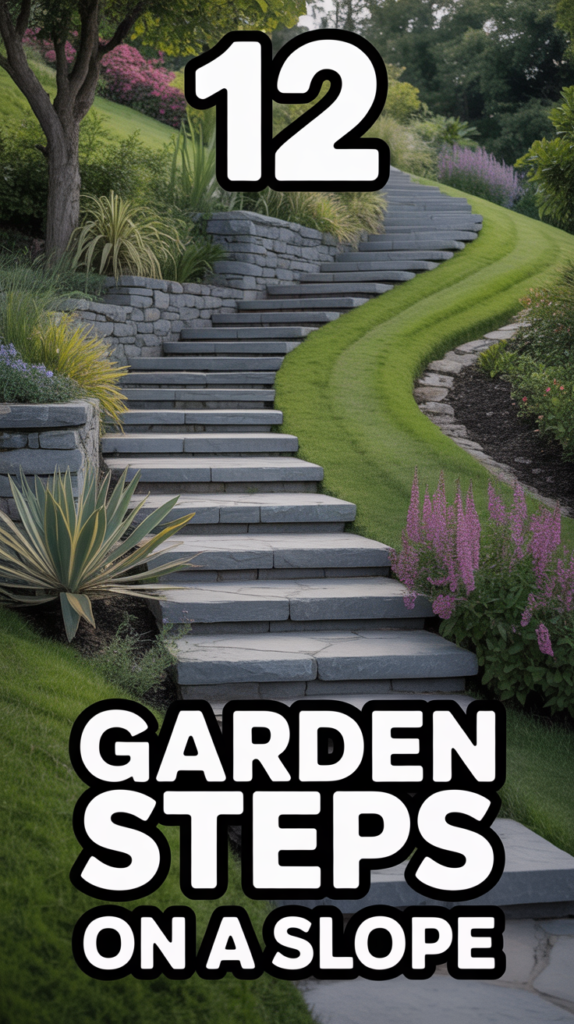
🌿 12 Garden Steps On A Slope
Got a garden that thinks it’s a mountain range? We totally get it. Slopes are great for dramatic views, but not so much for gracefully navigating with a tray of iced tea or, you know, just existing. Before you start planning a zipline, let’s chat about something way more chic and less likely to result in a sprained ankle: killer garden steps. Seriously, turning that tricky incline into a stylish ascent is easier than you think. And way more fun than just staring at it, wishing it would flatten itself out.
1. Timber Sleeper Steps
Okay, let’s talk about the OG of slope solutions: timber sleepers. They’re like the trusty old denim jacket of garden design – always in style, always practical.
These chunky beauties are perfect for creating a robust, rustic path up your incline. You just lay them horizontally, secure them, and fill behind with gravel or soil. It’s surprisingly simple and gives off major “cabin in the woods” vibes without the actual cabin.
Pro tip: Always choose treated timber to avoid a soggy, rotting mess in a few years. Nobody wants that kind of drama in their garden.
They work because they naturally blend with greenery and offer a solid, no-nonsense climb.
2. Natural Stone Slab Steps
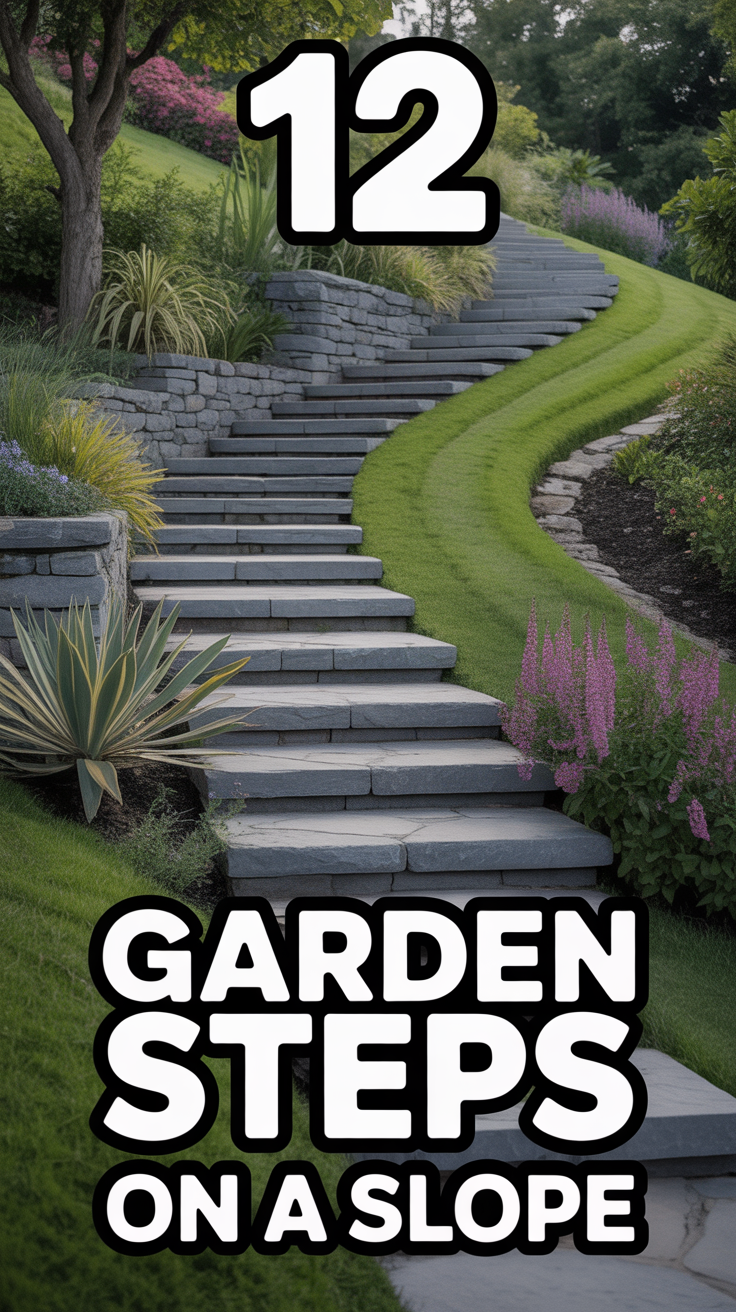
If you’re aiming for that “I just found these perfectly placed rocks” aesthetic, natural stone slabs are your jam. They bring an undeniable organic elegance to any sloped garden.
These bad boys are heavy, so maybe enlist a friend (or two, or three) for installation. Laying them into the slope creates a really solid, long-lasting path that looks like it’s been there forever. Each step feels substantial and grounded.
Pro tip: Vary the size and shape of the slabs slightly for a more authentic, less manufactured look. Nature rarely does perfect symmetry.
They work because they integrate seamlessly with the natural landscape, making your garden feel more established.
3. Gravel Steps with Edging
On a budget but still want that refined look? Say hello to gravel steps with proper edging. This combo is surprisingly sophisticated and wallet-friendly.
You define each step with sturdy edging (think metal, timber, or even small pavers) and then fill the tread with compacted gravel. It’s fantastic for drainage and gives a satisfying crunch underfoot. Plus, it’s super flexible for tricky curves.
Pro tip: Use a good quality landscape fabric beneath the gravel to prevent weeds from turning your chic steps into a wild forest floor.
They work by offering a clean, modern aesthetic that’s both practical and easy on the purse strings.
4. Terraced Steps with Planters
Why just have steps when you can have steps AND a garden party on every level? Terraced steps with integrated planters are the ultimate multi-taskers for a sloped space.
Imagine creating wide, shallow steps, with each riser also serving as the wall for a lovely planting bed. It’s a genius way to add greenery, manage erosion, and create distinct garden zones as you ascend. Your plants will thank you for the extra space.
Pro tip: Choose plants that thrive in containers or raised beds, and consider a drip irrigation system for fuss-free watering on every tier.
They work by maximizing usable space and turning a functional element into a stunning visual feature.
5. Curved Stone Steps
Straight lines are so last season. Embrace the organic flow of your garden with curved stone steps. They add a touch of whimsy and softness to an otherwise rigid climb.
Instead of a direct march up the hill, these steps gently wind their way upwards, inviting you to slow down and enjoy the journey. Using natural stone or pavers, you can create a really graceful, flowing path that complements the contours of your landscape.
Pro tip: Plan your curves with a hose or rope first to get the perfect sweep before you start digging. Precision is key to effortless elegance.
They work by creating visual interest and making the climb feel less arduous and more like a leisurely stroll.
6. Floating Concrete Steps
For the minimalist, modern garden, floating concrete steps are an absolute dream. They look like they’re just hovering there, defying gravity and looking incredibly cool while doing it.
These individual concrete slabs are set into the slope with a gap underneath, often filled with gravel or low-growing groundcover. The effect is sleek, architectural, and seriously impactful. It’s definitely a statement piece.
Pro tip: Ensure proper engineering and foundation work for these. You don’t want your floating steps to actually float away after a big rain.
They work by delivering a strong, contemporary vibe that elevates the entire garden design.
7. Rustic Log Steps
Channel your inner forest nymph with rustic log steps. These are perfect for a woodland garden or a property with a more natural, untamed aesthetic.
Using sturdy, rot-resistant logs (think cedar or redwood), you can create charming, chunky steps that blend seamlessly with a natural setting. They’re surprisingly sturdy and have that lovely, earthy appeal. Plus, they look great with moss and ferns.
Pro tip: Partially bury the logs and secure them with rebar stakes to prevent shifting. Nobody wants a runaway log step.
They work by enhancing a natural, organic garden style and providing a durable, earthy path.
8. Gabion Basket Steps
Feeling a bit industrial chic? Gabion basket steps are your edgy, modern solution. These aren’t just for retaining walls anymore, folks.
Gabion baskets are wire cages filled with rocks, brick, or even recycled concrete. You can stack them to form sturdy, visually interesting steps that have a unique textural appeal. They’re incredibly durable and provide excellent drainage.
Pro tip: Use attractive, smooth river stones for the visible faces of the gabions to give them a more polished, less construction-site look.
They work by bringing a distinctive, contemporary, and incredibly robust element to your sloped garden.
9. Repurposed Pallet Steps
For the truly eco-conscious and DIY-savvy, repurposed pallet steps can be a creative, budget-friendly option. It’s all about seeing potential where others see trash.
With some clever cutting, stacking, and weatherproofing, pallet wood can be transformed into quirky, temporary, or semi-permanent steps. This approach screams “resourceful chic.” Just make sure your pallets are heat-treated, not chemically treated.
Pro tip: Sand down any rough edges and apply a good quality outdoor sealant to prolong their life and prevent splinters. Safety first, even with reclaimed glory.
They work by offering a unique, sustainable, and highly customizable solution for a garden on a shoestring budget.
10. Classic Brick Steps
You can never go wrong with a classic, and brick steps are the epitome of timeless garden elegance. They bring structure, warmth, and a touch of old-world charm.
Whether you’re going for a formal herringbone pattern or a simple stack, bricks offer incredible versatility and durability. They pair beautifully with traditional homes and gardens, providing a solid, inviting ascent. Plus, they develop a lovely patina over time.
Pro tip: Ensure a solid, level foundation of compacted gravel and sand to prevent your beautiful brickwork from shifting or sinking unevenly.
They work by providing a sturdy, visually appealing, and historically rich pathway that complements many garden styles.
11. Poured Concrete Steps with Texture
Forget boring grey slabs; poured concrete steps with texture are where it’s at for custom, modern solutions. You can literally mold your steps to fit your vision.
Concrete allows for endless design possibilities – from sweeping curves to sharp angles, and you can add texture with stamps, aggregates, or even by brushing the surface. It’s incredibly durable and low maintenance once installed. Plus, you can tint it to match your garden’s palette.
Pro tip: Integrate subtle LED lighting into the risers for a stunning nighttime effect and improved safety. Future you will thank you.
They work by offering unparalleled customization, durability, and a sleek, contemporary finish to your sloped landscape.
12. Mixed Material Steps
Why commit to just one material when you can have a party of textures? Mixed material steps are for the bold and indecisive (in the best way possible).
Think timber treads with stone risers, or concrete slabs bordered by gravel. Combining different elements adds incredible visual depth, contrast, and personality to your steps. It’s a fantastic way to reflect different zones or themes within your garden.
Pro tip: Choose materials that complement each other in terms of color and texture to avoid a chaotic look. Aim for harmony, not a design free-for-all.
They work by creating dynamic visual interest and allowing for unique, personalized garden pathways.
Conclusion
So, there you have it, 12 ways to conquer that slope and turn it into a total showstopper. No more awkward scrambles or mudslides – just pure, unadulterated garden glory. Remember, a tricky slope isn’t a problem; it’s just your garden’s way of asking for a little creative flair. Go forth, get stepping, and make that incline work for you. Your knees (and your iced tea) will thank you.