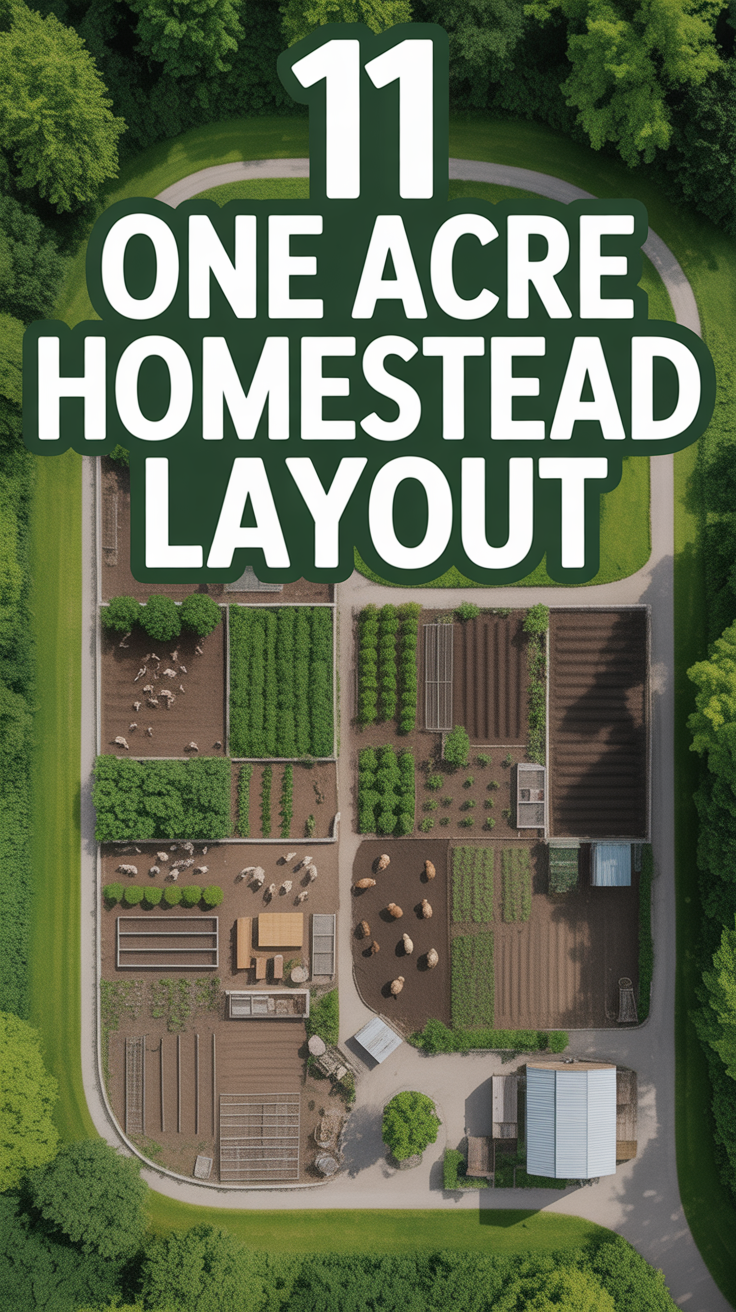
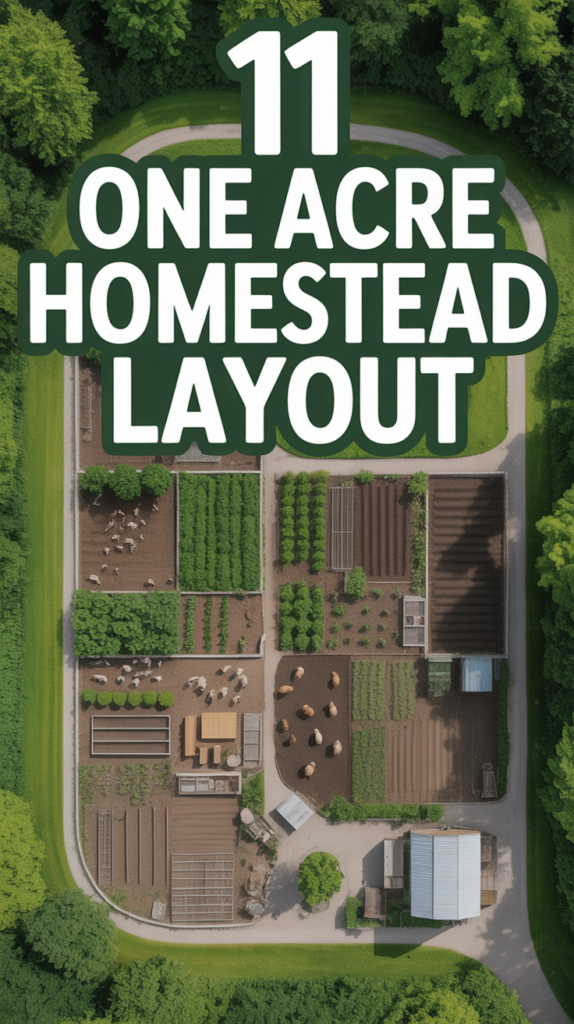
🏡 11 One Acre Homestead Layout
So, you’ve got an acre, huh? That’s like, a whole entire football field of potential, minus the yelling fans and questionable hot dogs. It’s the perfect sweet spot for dreaming big without needing a tractor every five minutes. Forget those sprawling 50-acre fantasies; we’re talking about making every square foot sing on your very own micro-paradise. Let’s get strategic and turn that patch of earth into a productivity powerhouse, shall we?
1. Smart Zoning for Maximum Impact
Okay, first things first, you’ve got to think like a city planner for your tiny empire. Divide your acre into zones based on how often you’ll visit them.
Your most frequently visited spots – like the kitchen garden or chicken coop – should be closest to your home. Less frequent areas, such as a woodlot or an orchard, can hang out further away. Pro tip: Map out your pathways now; your future self will thank you for not trekking through mud just for an egg.
This layout ensures you’re not wasting precious energy on daily tasks, making homesteading feel less like a chore and more like a well-oiled machine.
2. Microclimate Mapping Magic
Your acre isn’t just one big, uniform chunk; it’s a patchwork of tiny environments. Some spots get all the sun, others are shady havens, and some are wind tunnels. Seriously, grab a notebook and observe for a few days.
Identify your sunniest spots for those hungry tomatoes and your shadier corners for delicate greens. Knowing where the wind whips will help you place windbreaks or sheltered animal housing. This isn’t just about plants thriving; it’s about optimizing every single plant’s happiness. Knowing your land’s quirks helps you place everything perfectly, reducing stress for your plants and you.
3. Water Harvesting Wonders
Rainwater is gold, people, pure gold. Don’t let it just run off your roof and disappear into the ether. Set up some serious rain barrel systems or even a small pond if your land allows.
Direct rainwater from your house, shed, and greenhouse roofs into storage. You can even consider a greywater system for non-potable uses like irrigating fruit trees. Pro tip: Install a first-flush diverter on your rain barrels to keep initial roof gunk out of your pristine water supply. This conserves precious resources and cuts down on your water bill, because who doesn’t love free water?
4. Edible Forest Garden Finesse
Imagine a garden that practically takes care of itself. That’s the dream of an edible forest garden. It’s all about stacking functions and planting in layers.
Think fruit and nut trees as your canopy, berry bushes below, perennial vegetables in the understory, and groundcovers. This multi-layered approach mimics a natural ecosystem, providing food, habitat, and requiring less work once established. It’s a low-maintenance food factory that just keeps giving.
5. Raised Beds and Intensive Gardening
On an acre, every inch counts, so let’s talk about maximizing your veggie patch. Raised beds are your best friend here.
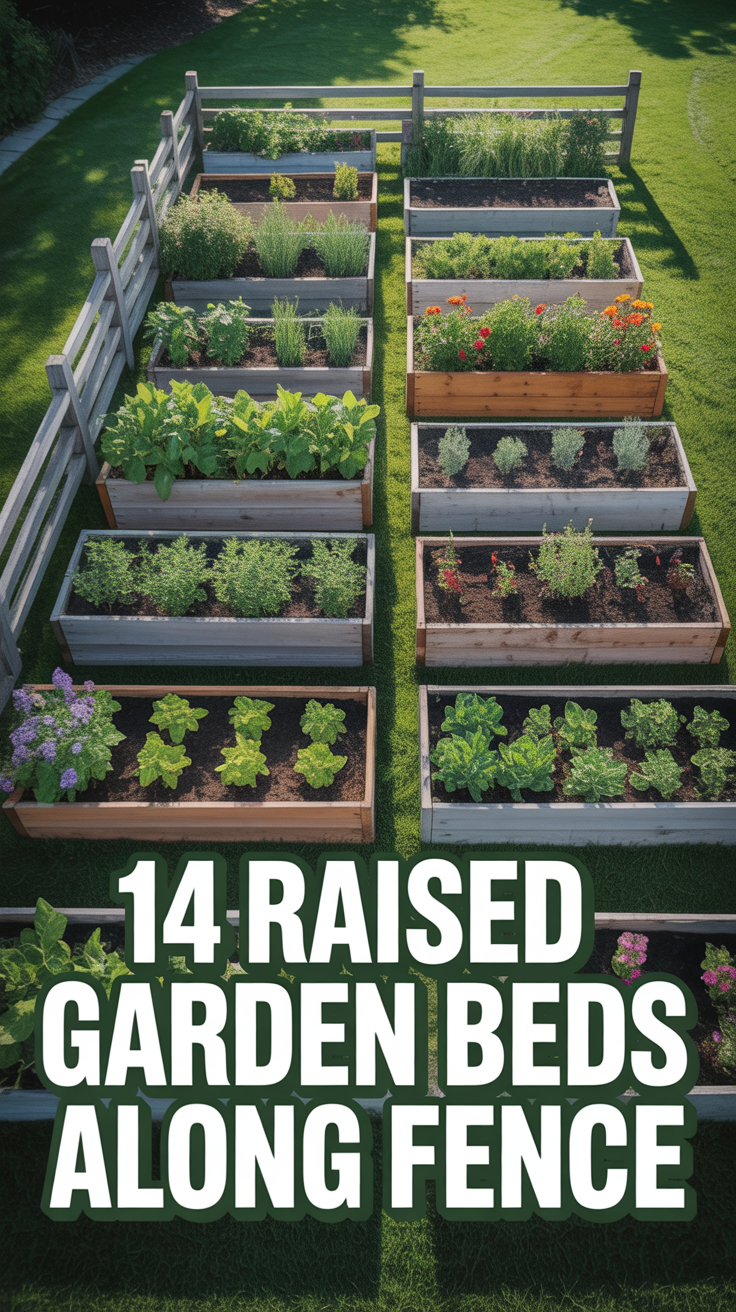
They allow for excellent drainage, warmer soil earlier in the season, and you can fill them with amazing compost-rich soil. Plus, you can plant things closer together than in traditional rows. Pro tip: Make your raised beds no wider than four feet so you can reach the middle from either side without stepping on the soil. You’ll get way more bang for your buck, harvesting an insane amount of produce from a smaller footprint.
6. Composting and Vermiculture Station
Waste isn’t waste; it’s future soil. You absolutely need a dedicated spot for turning kitchen scraps and garden refuse into nutrient-rich goodness.
Set up a few bays for composting – one for active composting, one for curing, and maybe one for leaves. Add a vermiculture bin (worm farm) for breaking down kitchen scraps even faster. This creates a closed-loop system, feeding your garden with black gold and reducing your trash output. It’s like alchemy, but with less magic and more worms.
7. Small Livestock Integration
Even on an acre, you can totally have some animal buddies. Chickens are practically a given for fresh eggs and pest control, but consider rabbits for meat or manure, or even a couple of ducks for slug patrol.
Designate a secure, predator-proof area with adequate shelter, food, and water. Think about how their manure can be integrated into your compost system. Pro tip: Rotate your chicken tractor through garden beds after harvest to let them clean up weeds and fertilize. They’re not just cute; they’re working members of your homestead team.
8. Tool Shed and Workshop Hub
You’re going to accumulate tools, trust me. From shovels to seed packets, you need a central, organized spot to keep everything dry and accessible.
A small shed near your main garden area or house is ideal. Think about shelving, hooks, and maybe even a small workbench for tinkering. This keeps your good tools in good shape and your sanity intact, because nobody wants to hunt for a trowel in the rain. A well-organized shed makes tackling projects way less daunting.
9. Outdoor Living and Gathering Space
Homesteading isn’t just about work; it’s about enjoying the fruits (and veggies) of your labor. Carve out a spot for relaxation and entertaining.
This could be a simple patio, a fire pit area, or a pergola covered in grapevines. Make it comfortable and inviting, perhaps even near your edible garden so you can literally pluck dinner. Pro tip: Position it to catch the evening sun or provide shade during the hottest part of the day. You’ve built this amazing place; you might as well kick back and enjoy it with friends and family.
10. Pollinator Garden and Native Plants
Your garden needs friends, and those friends often have wings. Dedicate a section to plants that attract bees, butterflies, and other beneficial insects.
Choose a variety of native flowering plants that bloom throughout the season. These guys aren’t just pretty; they’re essential for pollinating your food crops and keeping pest populations in check. It’s a win-win: beautiful blooms and a bustling ecosystem helping your homestead thrive.
11. Perimeter Fencing and Entryway
Let’s be real, you want to keep the cute bunnies out of your carrots and know where your property begins and ends. A good fence isn’t just for security; it defines your space.
Decide on a fence type that suits your needs – perhaps a sturdy woven wire for animals or a more decorative picket fence. Don’t forget a welcoming but functional entryway. This creates a clear boundary, adds curb appeal, and keeps your precious plants (and sometimes animals) exactly where they belong.
Conclusion
Alright, you savvy homesteader, you’ve got the blueprint for turning that single acre into a vibrant, productive, and ridiculously cool living space. It’s not about having endless land; it’s about thoughtful design, smart choices, and a dash of playful determination. Go forth, map it out, and start digging. Your future self (and your taste buds) will absolutely thank you for building such an epic mini-farm. Happy homesteading, you magnificent dirt whisperer!