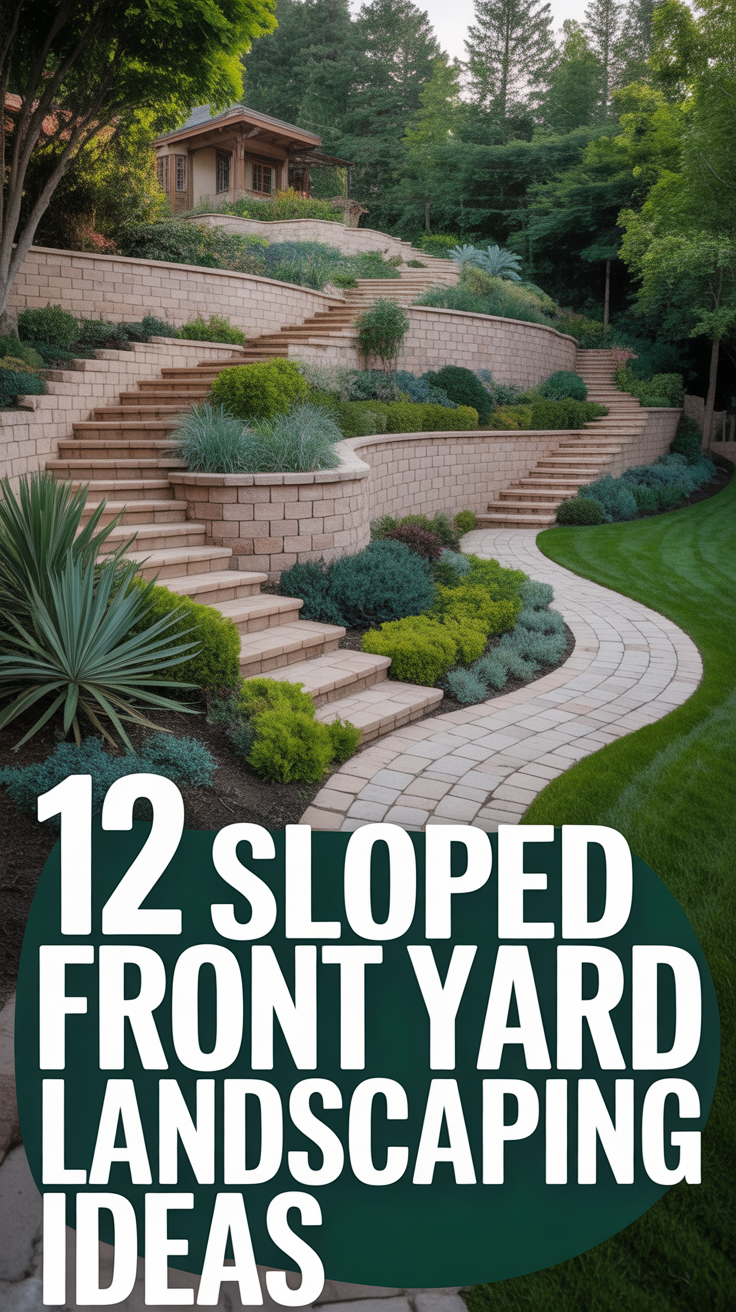
🏡 12 Sloped Front Yard Landscaping Ideas
Alright, let’s be real. That sloped front yard? It’s either a design challenge staring you down every morning, or it’s a secret superpower waiting for its cape. Most folks see a hill and think “erosion nightmare” or “mowing disaster.” But guess what? We see untapped potential for some serious curb appeal. Stop fighting gravity and start making it work for you. Your yard isn’t just sloping; it’s practically begging for a glow-up.
1. Terraced Gardens
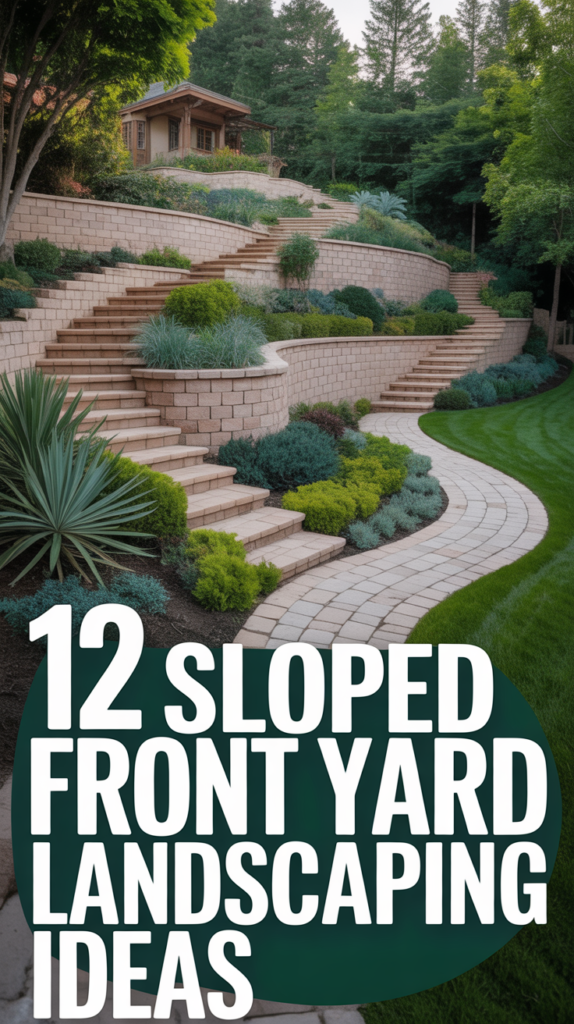
Got a hill? Make it work for you, darling. Terracing is the OG solution for slopes, creating stunning, flat levels that are perfect for planting. It’s like giving your yard a set of fabulous, functional steps.
These mini-plateaus not only look incredibly chic but also do a stellar job at preventing soil erosion and managing water runoff. Plus, you get multiple distinct planting beds to play with, which is basically a gardener’s dream come true.
Pro tip: Mix up your retaining wall materials – think natural stone on one level, then maybe some sleek wood or pre-cast blocks on another for visual interest. It keeps things from looking too uniform and, frankly, boring.
Terraced gardens transform a challenging incline into a structured, multi-dimensional masterpiece that boosts both beauty and practicality.
2. Retaining Walls Stylish Edition
Not just practical, but seriously chic. Forget those bland, purely functional walls; we’re talking about retaining walls that double as design statements. These beauties aren’t just holding back dirt; they’re elevating your entire aesthetic.
You can use them to define different zones, create cozy seating areas, or even integrate built-in planters. Choose materials that complement your home’s style, whether that’s rustic stacked stone, modern concrete, or warm timber.
Pro tip: Integrate subtle lighting into your retaining walls. It adds a dramatic glow at night, highlights textures, and makes your yard look super inviting after dark. Because who doesn’t love a little evening drama?
These walls are the ultimate multitaskers, providing essential structural support while seriously upping your curb appeal game.
3. Rock Gardens
Low-maintenance, high impact. If you’re into that rugged, natural vibe, a rock garden on a slope is basically a match made in heaven. It embraces the topography rather than fighting it, creating a landscape that looks like it’s always belonged there.
Use local, native rocks of varying sizes to create natural-looking outcrops and crevices. Then, tuck in drought-tolerant plants like succulents, sedums, and alpine varieties that thrive with minimal fuss. Think less watering, more admiring.
Pro tip: Group your rocks in odd numbers and varying sizes to mimic natural formations. A lone rock looks lost; a cluster looks like a purposeful statement from Mother Nature herself.
Rock gardens are perfect for those tricky, dry spots on your slope, offering beauty with an impressively low commitment.
4. Cascading Water Features
Turn that slope into a zen zone. Imagine the soothing sound of trickling water flowing down your front yard. A cascading water feature isn’t just pretty to look at; it brings a whole new sensory experience to your landscape.
Design it to follow the natural contours of your slope, creating a series of gentle waterfalls or a babbling brook effect. It’s incredibly calming and instantly elevates your yard from “just grass” to “spa retreat.”
Pro tip: Ensure proper drainage and easy access for pump maintenance. You want the tranquility without the headache of fixing a leaky system. Also, consider adding some aquatic plants for extra charm.
A water feature adds dynamic interest, a calming ambiance, and seriously boosts your home’s “wow” factor.
5. Stepped Pathways or Stairs
Walk this way, but make it fabulous. If your slope needs to be traversed, why not make the journey as beautiful as the destination? Stepped pathways or grand stairs transform an inconvenient incline into an inviting architectural element.
Choose materials that complement your home, whether that’s rustic flagstone, modern concrete pavers, or warm timber. Wide, gently sloping steps feel more welcoming than narrow, steep ones. Plus, they offer a safer route during the wetter months.
Pro tip: Integrate low-voltage path lighting along your steps for safety and a magical glow after sunset. It turns a practical necessity into an enchanting feature.
These pathways not only provide safe and easy access but also add a touch of grandeur and structure to your sloped yard.
6. Groundcover Galore
Forget mowing, hello lushness. For a slope that’s not excessively steep but still a pain to mow, groundcover is your new best friend. It’s the ultimate low-maintenance, high-impact solution for blanketing your incline in gorgeous greenery.
Think creeping thyme, sedum, vinca, or even junipers. These plants spread out, creating a dense mat that prevents erosion, suppresses weeds, and looks incredibly lush. Plus, no more wrestling a lawnmower up a hill – your back will thank you.
Pro tip: Choose groundcovers that are well-suited to your local climate and the specific sun exposure of your slope. Some love sun, others prefer shade; match them right for effortless success.
Groundcover provides an easy-on-the-eyes, easy-on-the-back solution that keeps your slope looking tidy and vibrant.
7. Tiered Planters
Stack ’em high, watch ’em grow. Who says you can’t have a vibrant container garden just because your yard is on an angle? Tiered planters let you create vertical layers of color and texture, making the most of your sloped space.
You can use ready-made tiered planter systems or get creative with individual pots arranged on a series of small, sturdy steps or shelves. They’re super flexible, allowing you to easily swap out seasonal blooms or grow a mini herb garden.
Pro tip: Use lightweight potting mix and consider self-watering planters if you’re layering many. This makes maintenance a breeze and keeps your plants happy without constant drenching.
Tiered planters add dynamic vertical interest and an explosion of color, proving that even a slope can be a prime spot for container gardening.
8. Native Plantings
Go local, save the planet (and your water bill). Embrace the beauty of your region by filling your sloped front yard with native plants. They’re basically superheroes when it comes to low maintenance and thriving in your specific environment.
Native plants are already adapted to your soil and climate, meaning they require less water, fewer fertilizers, and generally less fuss. They also provide crucial habitat and food for local wildlife, making your yard an ecological haven.
Pro tip: Visit your local botanical garden or a specialized native plant nursery for expert advice on what grows best in your specific area. They’ll have the inside scoop on the real local stars.
Opting for native plantings creates an effortlessly beautiful, eco-friendly landscape that practically takes care of itself.
9. Dry Creek Beds
Rainy day? Make it a feature, not a flood. A dry creek bed is a brilliant, artistic, and highly functional way to manage stormwater runoff on a slope. It looks like a natural, winding stream, but without the constant need for water.
Constructed with various sizes of river rocks and pebbles, it guides excess water away from your home and into a designated drainage area. When it rains, it’s a temporary stream; when it’s dry, it’s a beautiful, sculptural element.
Pro tip: Line the trench with landscape fabric before adding rocks to prevent weeds from popping up and to help stabilize the bed. A little prep saves a lot of future weeding.
A dry creek bed solves a practical drainage problem with undeniable style, adding a unique, naturalistic touch to your landscape.
10. Berms and Swales
Play architect with your dirt. Berms are raised mounds of earth, and swales are shallow depressions. Together, they’re a dynamic duo for reshaping your sloped yard, directing water flow, and creating interesting contours.
You can strategically place berms to block unsightly views, create privacy, or even build microclimates for specific plants. Swales help channel water efficiently, preventing erosion and directing it to where it’s needed (or away from where it’s not).
Pro tip: For any significant earth moving, especially on a slope, it’s wise to consult with a landscape architect. They can ensure proper grading and prevent future drainage headaches.
Berms and swales offer a smart, sculptural way to manage your slope’s challenges while enhancing its aesthetic appeal.
11. Drought-Tolerant Gardens Xeriscaping
Thirsty for beauty, not water. If you’re in an arid region or just want to be super water-wise, a xeriscaped garden on your slope is a genius move. It proves that a low-water landscape can be incredibly lush and vibrant.
Focus on plants that naturally thrive with minimal irrigation, like various succulents, cacti, ornamental grasses, and Mediterranean herbs. Combine them with gravel, decorative rocks, and mulches for a textured, low-maintenance paradise.
Pro tip: Group plants with similar water needs together. This makes irrigation much more efficient, ensuring every plant gets exactly what it needs without waste.
Xeriscaping creates a stunning, resilient garden that conserves precious resources and looks effortlessly chic.
12. Garden Art and Sculptures
Your yard, your gallery. Sometimes, the best way to handle a tricky slope is to distract from it (or draw attention to it strategically) with some fabulous garden art. These pieces become focal points, adding personality and intrigue.
Think a striking metal sculpture, a whimsical ceramic piece, or even an antique wagon wheel nestled among your plantings. These elements draw the eye and create visual interest, making your slope feel intentional and curated.
Pro tip: Anchor larger art pieces securely, especially on a slope where they might be more prone to shifting or rolling. Safety first, even for art!
Garden art allows you to express your unique style, transforming your sloped yard into a personal outdoor exhibition.
Conclusion
See? That sloped front yard isn’t a curse; it’s a canvas just begging for your creative touch. Whether you’re terracing like a pro, channeling your inner zen master with a water feature, or just letting some groundcover do its thing, there’s a solution out there that’s totally you. So, go forth and conquer that incline. Your neighbors (and your curb appeal) will thank you for it. Now get out there and make that slope legendary!