⛰️ 11 Sloped Garden Ideas Hillside Landscaping
👩🌾 The Master Gardener's Starter Kit
Having a healthy, thriving garden is ten times easier when you aren't fighting with cheap tools. These are the 5 rugged, reliable gardening essentials that experienced landscapers and passionate home gardeners swear by to save time, protect their joints, and get better yields.
✂️ Felco F-2 Classic Manual Pruners
The legendary "buy it for life" pruning shears. Cheap pruners crush stems and spread disease, but these Swiss-made, razor-sharp bypass pruners slice cleanly through thick branches and rose bushes effortlessly. Every single part is replaceable, making it a true lifetime investment.
💧 XLUX Soil Moisture Meter
Overwatering is the number one reason plants die. This simple, battery-free probe completely removes the guesswork from your watering schedule. Just stick it in the soil at root level to instantly know exactly when your veggies, flowers, or houseplants are actually thirsty.
🐍 Flexzilla Heavy Duty Garden Hose
Stop wrestling with stiff, heavy rubber hoses that pinch and cut off water flow. This incredibly lightweight, high-visibility green hose lays completely flat, never kinks under pressure, and is surprisingly easy to coil back up—even in freezing weather.
🧘♀️ Extra Thick High-Density Kneeling Pad
Gardening shouldn't mean suffering joint pain for three days afterward. This ultra-thick, water-resistant foam pad absorbs rocks, roots, and uneven ground, protecting your knees whether you're pulling weeds for five minutes or planting bulbs all afternoon.
🧤 Pine Tree Tools Bamboo Garden Gloves
Finally, a glove that protects hands without making you lose your dexterity. These breathable bamboo-fiber gloves fit like a second skin, allowing you to handle delicate seedlings or grip muddy tools securely while keeping dirt from packing under your fingernails.
Okay, let’s be real. That sloped yard of yours? It’s either your biggest headache or your secret weapon for garden glory. We’re leaning heavily towards the latter, because who wants a flat, boring yard when you can have a dynamic, multi-level masterpiece? Ditch the dread, embrace the incline. Your hillside isn’t a problem, it’s an invitation to get seriously creative. We’re about to spill the tea on turning that tricky terrain into the coolest spot on the block. Grab your gardening gloves (or at least your phone for inspo), because these ideas are about to elevate your outdoor game, literally.
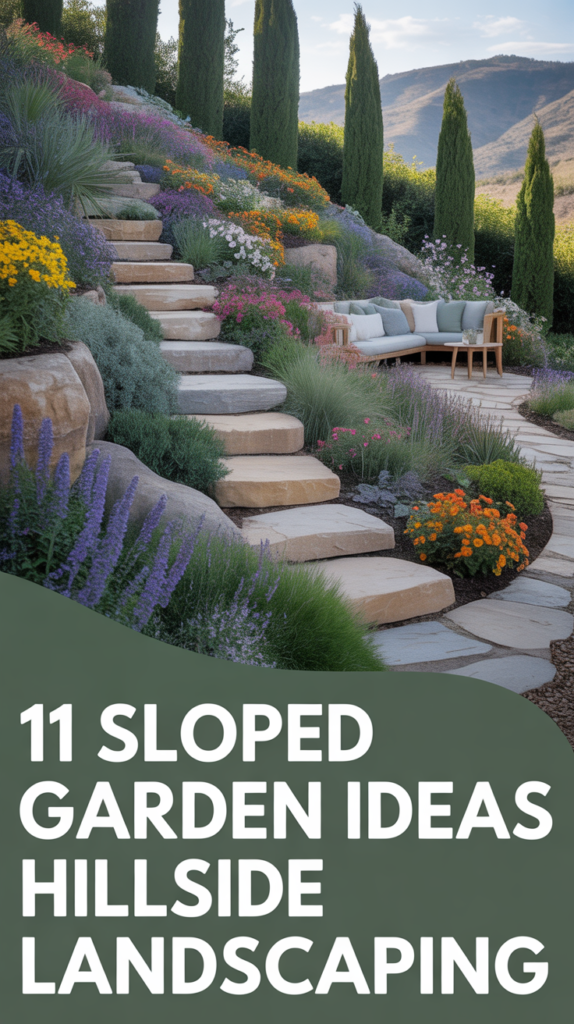
1. Terraced Gardens
Let’s talk about the OG of slope solutions. Terraces are basically creating flat steps on your hill, giving you multiple zones to play with. Think of it as building mini-gardens, each with its own vibe.
You construct retaining walls from materials like stone, timber, or even gabion cages to hold back the soil, then fill in behind them to create level planting areas. This totally stops erosion in its tracks and gives you prime real estate for diverse plantings.
Pro tip: Don’t make your terraces too narrow. Give yourself enough depth to plant properly and even add a little seating nook on one level. You’ll thank yourself later when you’re sipping a smoothie amidst your lush layers.
This approach works because it tames the beast, turning an unusable slope into structured, beautiful, and highly functional garden beds. Plus, it just looks super chic.
2. Rock Gardens
Nature already gave you a hint here, right? Slopes and rocks are practically besties. A rock garden naturally complements the existing topography and looks incredibly organic.
You strategically place boulders and smaller stones, creating crevices and pockets for plants that love excellent drainage. Think succulents, alpine plants, and ornamental grasses that thrive in lean, well-drained soil.
Pro tip: Bury a good portion of your rocks. They’ll look more natural, like they’ve always been there, rather than just plonked on top. Also, group them in odd numbers for visual appeal.
This idea is brilliant because it embraces the challenge, requiring less soil amendment and often less watering once established. It’s low-maintenance cool, basically.
3. Cascading Water Features
Why fight gravity when you can make it work for you? A water feature that tumbles down your slope is pure magic and instantly elevates your garden’s zen factor.
You design a series of small ponds or basins connected by gentle waterfalls or rills, allowing water to flow naturally from top to bottom. The sound alone is worth the effort, creating a soothing ambiance.
Pro tip: Incorporate aquatic plants in the basins and moisture-loving plants along the edges of the cascade. This softens the hardscaping and makes it look like a natural stream.
This works wonders because it uses the slope’s natural elevation change to create dynamic movement and sound, turning a difficult area into a captivating focal point.
4. Multi-Level Decks and Patios
Sometimes you just need a flat spot to chill, right? Breaking up a steep slope with tiered decks or patios creates usable outdoor living spaces that feel like an extension of your home.
You build distinct platforms connected by steps, allowing for different functional zones like dining, lounging, or even a fire pit area. Materials like wood, composite decking, or pavers can define these spaces.
Pro tip: Mix up the materials or add built-in planters to define each level. This makes the transitions feel intentional and adds visual interest.
This solution is amazing because it solves the “where do we put the grill” dilemma and transforms a previously inaccessible slope into luxurious outdoor rooms. Functional and fabulous, darling.
5. Swales and Rain Gardens
Got runoff issues? Turn that problem into a solution with swales and rain gardens. These clever designs manage water, preventing erosion and nurturing specific plant communities.
You create gently sloped channels (swales) or depressions (rain gardens) lined with permeable materials and planted with moisture-loving native plants. They collect and slowly absorb rainwater, recharging groundwater instead of letting it rush away.
Pro tip: Choose plants that can handle both wet feet and drier periods. Native grasses, sedges, and certain wildflowers are often perfect for these dynamic environments.
This works because it’s an eco-friendly powerhouse, tackling erosion, conserving water, and creating a beautiful habitat for local wildlife all at once. Mother Nature totally approves.
6. Groundcover Power
Sometimes the best solution is to blanket that slope in green goodness. Groundcovers are your unsung heroes for erosion control and low-maintenance beauty.
You plant dense, spreading varieties like creeping thyme, sedum, juniper, or vinca that quickly form a living mat. Their root systems hold the soil in place, and they often require minimal care once established.
Pro tip: Prepare the soil well before planting and use erosion control fabric for really steep slopes initially. This gives your groundcovers the best chance to take hold.
This idea rocks because it’s a simple, effective, and often very beautiful way to stabilize soil, suppress weeds, and cover a large area with minimal fuss. Set it and forget it, almost.
7. Pathways and Steps
Make that slope navigable and charming by integrating a beautiful pathway with steps. It’s not just practical; it’s an invitation to explore your garden.
You design a winding path using materials like gravel, pavers, or natural stone steps, perhaps with gentle switchbacks to make the ascent easier. Flank the path with interesting plantings to guide the eye.
Pro tip: Ensure your steps have consistent rise and run to prevent tripping hazards. And consider adding subtle lighting for evening strolls. Safety first, beauty second (but barely).
This works because it turns a barrier into an asset, making all parts of your sloped garden accessible while adding a delightful architectural element. Plus, who needs a gym when you have garden steps?
8. Raised Beds on Contours
If full-blown terraces feel a bit much, consider a series of smaller, more informal raised beds that follow the natural contours of your slope. It’s a softer, more organic approach.
You build individual raised beds, often with timber or corrugated metal, placing them strategically across the slope. This creates manageable planting areas without the massive excavation of traditional terracing.
Pro tip: Angle the backs of the beds slightly into the slope for better stability and to minimize gaps. Fill with good quality soil, and you’re golden for growing veggies or flowers.
This is brilliant because it offers the benefits of raised beds (better soil, drainage, accessibility) in a way that adapts beautifully to an uneven landscape. It’s like terracing’s chill younger sibling.
9. Drought-Tolerant Planting Schemes
Slopes often mean quick drainage, which can lead to thirsty plants. Embrace the arid side with a carefully curated selection of drought-tolerant beauties.
You choose plants that are naturally adapted to dry conditions, such as lavender, rosemary, sedums, agaves, and many native grasses. Once established, these plants require minimal supplemental watering.
Pro tip: Amend your soil with plenty of organic matter to improve its water-holding capacity without impeding drainage. A good layer of mulch will also drastically reduce evaporation.
This approach is smart because it works with the natural tendencies of a sloped site, saving you water, time, and the heartache of wilting plants. Sustainable and stunning, what’s not to love?
10. Vertical Gardening Elements
Don’t just look at the horizontal space; think vertical! Incorporate elements like trellises, arbors, or even living walls against existing retaining walls to add dimension and greenery.
You install structures that allow climbing plants like clematis, climbing roses, or even edible peas and beans to grow upwards. This softens hardscaping and adds lushness without taking up much ground space.
Pro tip: Ensure your vertical structures are securely anchored, especially on a slope where strong winds might be a factor. Choose plants appropriate for the sun exposure of the wall.
This works because it maximizes planting potential in a clever way, adding visual interest and making your slope feel even more abundant and layered. It’s an optical illusion of epic proportions.
11. Strategic Tree and Shrub Planting
Trees and shrubs aren’t just pretty faces; their root systems are absolute powerhouses for stabilizing soil on a slope. Plant them strategically for long-term erosion control and beauty.
You select species with fibrous, extensive root systems, such as sumac, dogwood, certain willows, or native oaks, and plant them in staggered patterns across the slope. Their roots bind the soil, preventing slippage.
Pro tip: Always consider the mature size of the tree or shrub. You don’t want a plant that will eventually overwhelm your space or block important views. Right plant, right place, always.
This is a long-game winner because it offers a natural, sustainable, and beautiful solution for slope stability, providing shade, habitat, and year-round interest. It’s truly planting for the future.
🪴 The Plant Parent Oasis Build
Taking your indoor jungle or backyard patio to the next level requires more than just water and sunlight. These 5 aesthetic and highly functional accessories are what interior designers and green-thumb experts use to help plants thrive while looking visually stunning.
💡 SANSI Full Spectrum LED Grow Light Bulb
The secret to keeping monsteras and fiddle leaf figs exploding with new growth even in dark apartments. These powerful LED bulbs fit into standard decorative lamps, providing intense, natural daylight mimicry without the ugly purple hue of cheap grow lights.
🌳 Planters' Choice Bonsai Starter Kit
A beautiful introduction to the art of bonsai. This wildly popular kit comes with everything you need—seeds, soil pucks, clippers, and biodegradable pots—to grow four different types of miniature trees from scratch. It's a deeply rewarding and meditative project.
🪵 Elevated Cedar Raised Garden Bed
The perfect solution for growing fresh herbs and tomatoes on a patio or balcony. Standing waist-high, it completely eliminates the need for bending and weeding, while the beautiful, rot-resistant cedar construction instantly upgrades the look of any outdoor space.
✨ Vintage Brass Glass Plant Mister
Tropical plants like ferns and calatheas desperately need humidity, but you don't have to use an ugly plastic spray bottle. This gorgeous, vintage-inspired glass mister delivers a fine fog to keep leaves healthy, and it looks beautiful displayed on a shelf among your pots.
🏺 Terracotta Self-Watering Spikes
Never come home from a vacation to dead, crispy plants again. Simply push these porous terracotta spikes into the soil and insert any recycled glass bottle filled with water. The clay automatically releases moisture at the exact rate the soil dries out!
Conclusion
So there you have it, eleven epic ways to turn that intimidating incline into the garden of your dreams. Your sloped yard isn’t a design flaw; it’s a blank canvas just begging for some creative genius. Whether you’re all about those structured terraces, embracing the wild beauty of a rock garden, or letting water cascade down, you’ve got options. Stop seeing the hill and start seeing the opportunity. Go forth, get your hands dirty, and create some serious slope-side magic. Your backyard (and your Instagram feed) will thank you.