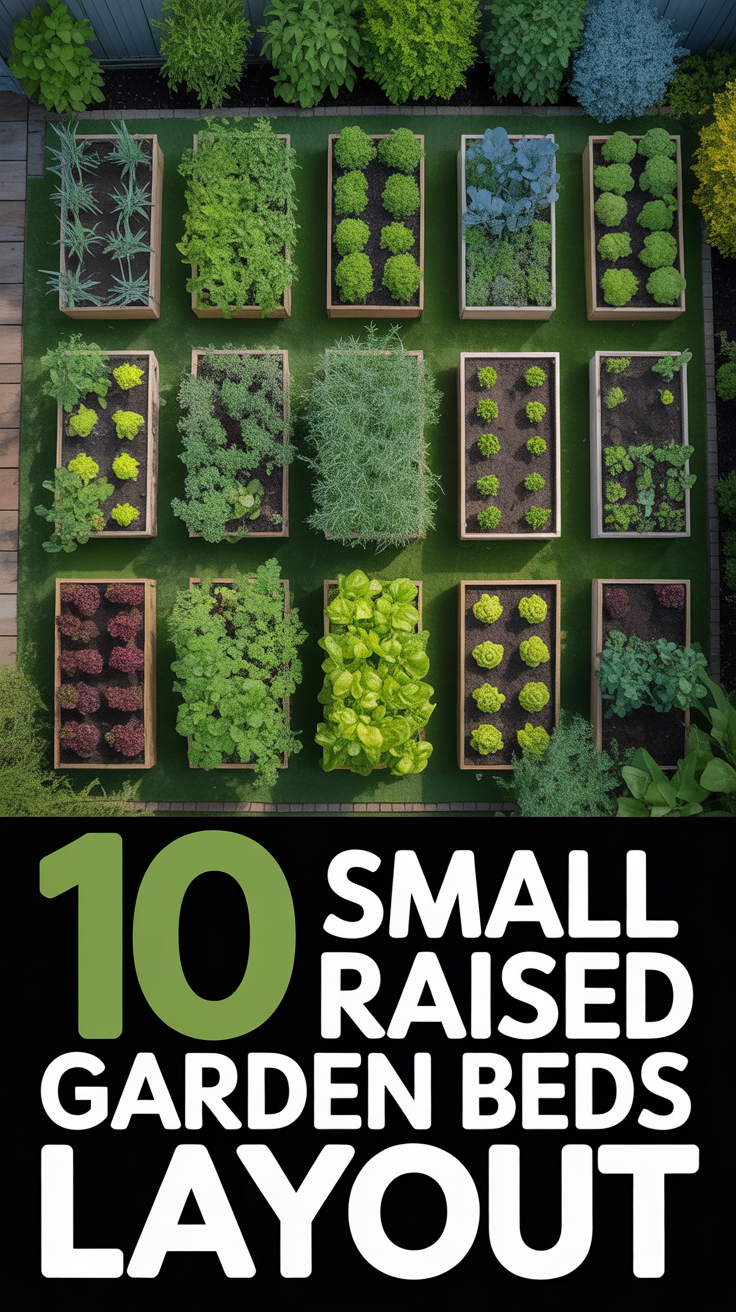
🌱 10 Small Raised Garden Beds Layout
Alright, garden gurus and plant parents-to-be, listen up. Ever stared at your tiny patio or minuscule yard and thought, “My green thumb dreams are officially thwarted by square footage” Well, think again. Small spaces are just begging for some raised bed magic, and we’re here to spill the tea on how to lay them out like a pro. Forget sprawling acres; we’re making every precious inch count with layouts that are smart, sassy, and seriously productive. Let’s get those hands dirty without breaking your back or your budget.

1. The Grid Genius Layout
Think of this as the ultimate organizational hack for your veggies. The grid layout divides your bed into small, manageable squares, usually 1×1 foot sections, making intensive planting a total breeze. You can cram a surprising amount of greens into a tiny footprint when you plan it out like a pro, ensuring everything gets its moment in the sun.
Pro tip: Use string or thin wood strips to physically delineate your grid; it makes planting and rotating crops a breeze and keeps things looking super tidy. This method practically guarantees you’re maximizing every single inch.
This layout is simple, incredibly effective, and oh-so-satisfying when every square is bursting with life.
2. L-Shaped Corner Comfort
Got an awkward corner just chilling there, doing nothing useful Well, that’s prime real estate for an L-shaped raised bed. This design hugs your existing boundaries, making use of space that might otherwise go completely ignored. It feels custom-built without the custom-built price tag.
Pro tip: Build it slightly taller in the corner section to create a natural focal point or to accommodate deeper-rooted plants. It adds visual interest and extra growing depth.
It transforms dead space into a vibrant growing zone, proving even the trickiest corners can be productive.
3. Vertical Integration Victory
Who says gardening is strictly horizontal When space is tight, go up, up, up. Incorporate trellises, obelisks, or even tiered planters within or directly behind your small raised beds. This lets you grow vining plants like cucumbers, beans, or even small melons without eating up valuable ground space.
Pro tip: Choose lightweight, attractive trellises that complement your bed material. You want support, not an eyesore. Consider a small arbor over a path for extra climbing space.
It’s like adding extra floors to your garden, expanding your harvest potential without expanding your footprint.
4. Modular Mix-and-Match Masterpiece
This layout is for the commitment-phobes and the re-arrangers among us. Use several smaller, individual raised beds that you can move around as your needs or whims dictate. Maybe you want more sun for one crop, or a different aesthetic for your patio party.
Pro tip: Ensure your modular beds have sturdy bases or even wheels if you plan on frequent redecorating. Nobody wants a rogue tomato plant rolling away mid-season.
It offers ultimate flexibility, letting you adapt your garden layout with the changing seasons or your fickle design preferences.
5. Companion Planting Clusters
This isn’t just about layout; it’s about smart plant pairings that work together in harmony. Group plants that benefit each other in specific sections of your small raised bed. Think tomatoes with basil, or carrots with rosemary. It’s like a tiny, self-sufficient ecosystem.
Pro tip: Research compatible plant pairs that deter pests or improve growth. A little planning here goes a long way in keeping your small garden healthy and productive naturally.
It’s a clever way to boost yields and keep pests at bay, making your small bed incredibly efficient.
6. The Keyhole Garden Kick
A keyhole garden is a circular raised bed with a cut-out section on one side that leads to a central composting tube or basket. You feed your kitchen scraps into the center, and the nutrients leach out into the surrounding soil, feeding your plants directly. It’s gardening with a built-in nutrient delivery system.
Pro tip: Line the composting basket with cardboard or natural fiber to prevent soil from washing into the center too quickly. Keep that nutrient flow strong.
This design is brilliantly self-sustaining and maximizes soil fertility in a compact, stylish package.
7. Path Defined Zones
If you have a slightly larger small space, use narrow paths to define distinct growing zones within your overall raised bed area. This could mean two or three small beds separated by a stepping stone path, making access easy and preventing soil compaction. It gives structure without feeling crowded.
Pro tip: Keep paths just wide enough for comfortable kneeling or a small wheelbarrow. Every inch counts, so don’t go overboard with the pavement.
It organizes your garden into functional, accessible sections, making maintenance a breeze and keeping your plants happy.
8. Edible Border Bliss
Line your fence, a wall, or even the edge of your deck with a long, narrow raised bed. This uses space that might otherwise just sit there looking boring. You can grow herbs, leafy greens, or even compact berry bushes right where you can easily reach them.
Pro tip: Ensure the bed depth is appropriate for what you plan to grow. Shallow herbs might be fine, but deeper root veggies need more room to stretch.
It turns an overlooked perimeter into a vibrant, productive, and beautiful boundary.
9. Container Combo Creativity
Why limit yourself to just the raised bed Think of your small raised bed as the anchor, then strategically place various sizes of containers around or even inside it. This adds layers, height, and allows for even more planting density. Moveable pots mean you can chase the sun or bring delicate plants indoors.
Pro tip: Choose containers that complement your raised bed’s aesthetic. Mixing materials and colors can add visual appeal, but keep it cohesive to avoid a chaotic look.
It multiplies your growing space and adds dynamic visual interest to your compact garden design.
10. Raised Bed Island Oasis
If your small space is more open, consider a single, centrally located raised bed as your garden’s focal point. This “island” can be accessed from all sides, making planting, weeding, and harvesting super convenient. It creates a striking visual statement and maximizes accessibility.
Pro tip: Shape matters here. A circular or hexagonal island bed can be particularly eye-catching and efficient for reaching all plants without stepping into the soil.
This layout offers maximum accessibility and creates a stunning centerpiece for even the tiniest outdoor areas.
Conclusion
See That wasn’t so hard. Even with a postage stamp-sized plot, you can cultivate a thriving oasis. It’s all about smart planning, a little strategic thinking, and embracing the idea that small doesn’t mean less. So go forth, choose your layout, and get ready to impress everyone with your bountiful, beautiful, and brilliantly designed small raised garden beds. Your future self (and your taste buds) will thank you.