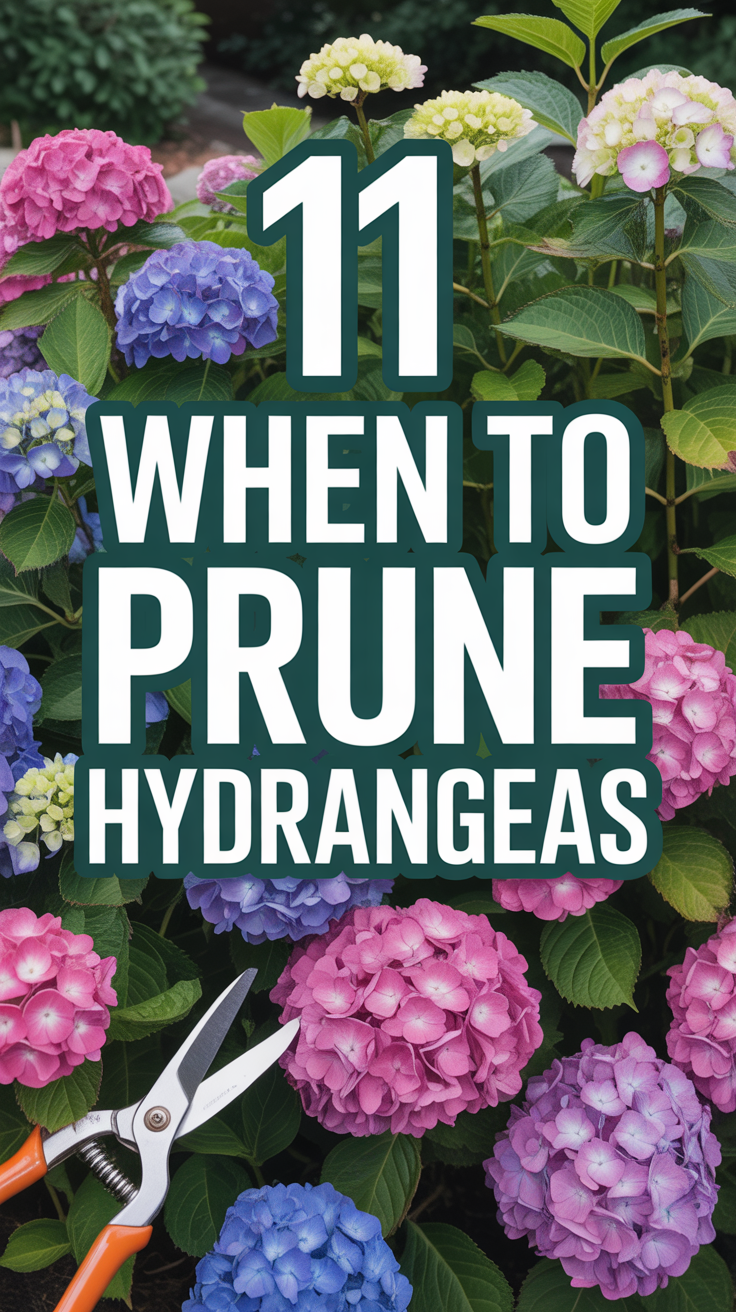
🌸 11 When To Prune Hydrangeas
Okay, real talk. Your hydrangeas are gorgeous, right? But sometimes they look a bit… wild. Like they just rolled out of bed after a particularly epic garden party. Figuring out when to give them a haircut can feel like cracking a secret code, and nobody wants to accidentally snip off next year’s blooms. Don’t sweat it, because we’re about to spill the tea on exactly when to grab those pruners for peak flower power.
1. Bigleaf Hydrangeas (Mopheads & Lacecaps)
These divas of the garden, scientifically known as Hydrangea macrophylla, bloom on “old wood.” That means they set their flower buds on the stems from the previous year. Pruning at the wrong time? Say goodbye to those stunning blooms. It’s a tragedy, really.
When to do it: The golden rule here is to prune immediately after they finish flowering in summer. This gives them plenty of time to set new buds for next year’s show. Just deadhead spent blooms and remove any weak or crossing stems. Easy peasy.
Pro tip: If you’re only removing spent flowers, snip just below the flower head or to the nearest healthy leaf node. Avoid cutting into old, healthy stems unless absolutely necessary for shaping or removing dead bits. You’re basically giving them a light trim, not a buzzcut.
Why it works: You’re cleaning things up without messing with their future flower plans. Smart, right?
2. Oakleaf Hydrangeas
Oh, the majestic Oakleaf (Hydrangea quercifolia)! With their unique foliage and dramatic conical blooms, these beauties are also old wood bloomers. They bring a whole vibe to the garden, especially in the fall with their gorgeous leaf color. You definitely don’t want to mess that up.
When to do it: Just like their Bigleaf cousins, prune your Oakleaf hydrangeas right after they finish blooming. They generally need less pruning than other types, so think minimal intervention.
Pro tip: Focus on removing any dead, damaged, or crossing branches. If you need to reduce their size, do it sparingly and always after flowering. These plants have a naturally elegant shape, so let them do their thing. They’re not looking for a drastic makeover.
Why it works: You maintain their natural form and ensure a continuous display of their stunning flowers year after year. It’s about respect for their inherent beauty.
3. Mountain Hydrangeas
Meet the Mountain Hydrangea (Hydrangea serrata), often mistaken for a Bigleaf but generally smaller and hardier. These charmers also bloom on old wood, making them part of the “don’t prune in spring” club. They’re like the quiet, understated cool kids of the hydrangea world.
When to do it: You guessed it: after they bloom in summer. They tend to have a more delicate appearance and don’t usually grow into massive shrubs, so heavy pruning is rarely needed.
Pro tip: Stick to removing spent flowers and any unsightly or weak growth. If you’re in a colder climate, leaving the spent flower heads on through winter can offer some protection to the buds below. Plus, they can look pretty cool dusted with snow.
Why it works: You keep them tidy and blooming without stressing them out. They prefer a gentle touch.
4. Panicle Hydrangeas
Hello, showstoppers! Panicle Hydrangeas (Hydrangea paniculata), like ‘Limelight’, ‘Vanilla Strawberry’, and ‘PeeGee’, are the rockstars of the new wood blooming world. This means they produce flowers on the growth that develops in the current season. This makes them super forgiving and a joy to prune.
When to do it: This is where it gets fun! Prune these beauties in late winter or early spring, before new growth really kicks off. You can be pretty aggressive with them, and they’ll bounce back with enthusiasm.
Pro tip: You can cut them back by one-third to two-thirds of their total height to encourage strong, sturdy stems and larger flowers. Some folks even cut them back to just a few feet from the ground. Don’t be shy! They love a good haircut.
Why it works: Pruning now stimulates vigorous new growth, leading to an abundance of those iconic cone-shaped blooms. More flowers, please!
5. Smooth Hydrangeas
The beloved Smooth Hydrangea (Hydrangea arborescens), featuring ‘Annabelle’ and ‘Incrediball’, is another fantastic new wood bloomer. These are known for their massive, round flower heads that can sometimes get a bit floppy if not managed. They’re the ones that look like giant snowballs.
When to do it: Similar to Panicle hydrangeas, the best time to prune Smooth hydrangeas is in late winter or early spring, before new growth emerges. Seriously, this is your prime pruning window.
Pro tip: For the biggest, strongest blooms, you can cut these plants back quite severely – often to about 1-2 feet from the ground. This encourages robust new stems that are better able to support those gigantic flower heads. It feels scary, but they totally love it.
Why it works: Aggressive pruning promotes strong new growth and prevents floppiness, ensuring your ‘Annabelle’ looks more “incredible” and less “annoying.”
6. Removing Dead or Damaged Wood
This is a universal rule for all hydrangea types, regardless of when they bloom. Think of it as essential plant first aid. Nobody wants dead, scraggly bits hanging around, looking sad.
When to do it: Anytime you spot it! Seriously, if you see a branch that’s clearly dead, broken, diseased, or rubbing against another, get rid of it. This isn’t a scheduled appointment; it’s an emergency.
Pro tip: Make sure your pruners are sharp and clean. Cut back to healthy wood, just above a strong bud or branch union. This prevents disease from spreading and encourages healthy regrowth. Clean cuts are happy cuts.
Why it works: Removing unhealthy parts improves air circulation, prevents disease, and directs the plant’s energy to healthy growth. It’s like giving your plant a detox.
7. Shaping and Size Control
Sometimes your hydrangea just gets a little… rambunctious. It grows too big for its space or starts looking a bit lopsided. This is when you step in for some gentle persuasion, not a full-on demolition.
When to do it: For old wood bloomers, do light shaping right after flowering. For new wood bloomers, you have more flexibility and can do more significant shaping in late winter/early spring. Always consider the plant’s natural form.
Pro tip: Step back frequently to assess your work. You want to maintain a natural shape, not create a geometric monstrosity. Remove the largest, oldest stems from the base to open up the plant and reduce overall size without sacrificing too many blooms. Think of it as a strategic haircut, not a hack job.
Why it works: You keep your hydrangea looking tidy and proportionate to its surroundings without sacrificing its ability to produce flowers. Everyone wins.
8. Rejuvenation Pruning
Got an old, overgrown, maybe even neglected hydrangea that just isn’t producing like it used to? It might be time for a serious intervention. This is for the plants that look like they’ve seen better days and are ready for a fresh start.
When to do it: For new wood bloomers (Panicle and Smooth), you can do a hard rejuvenation prune in late winter/early spring, cutting all stems back to about 6-12 inches from the ground. They’ll come back strong.
Pro tip: For old wood bloomers (Bigleaf, Oakleaf, Mountain), a full rejuvenation prune is risky for next year’s flowers. Instead, perform a staged rejuvenation over 2-3 years. Each year, remove about one-third of the oldest, thickest stems at the base. This gradually renews the plant while still allowing some blooms. Patience is a virtue here.
Why it works: You breathe new life into an aging plant, encouraging vigorous new growth and better flowering in the long run. It’s like sending your plant to a spa retreat.
9. Deadheading Spent Blooms
This isn’t strictly necessary for the plant’s health, but it definitely keeps things looking tidy and can sometimes encourage a few more blooms. Plus, who doesn’t love a fresh look?
When to do it: Anytime after the flowers fade. For old wood bloomers, snip just below the spent flower head or to the first set of healthy leaves. For new wood bloomers, you can be a bit more relaxed, as future blooms aren’t on those specific stems.
Pro tip: If you live in a cold climate, consider leaving some spent blooms on your hydrangeas through the winter. They can add some cool texture and visual interest, especially when covered in frost or snow. Plus, they offer a tiny bit of protection to the buds below. It’s a win-win.
Why it works: It keeps your plant looking its best and can sometimes redirect energy into more flowers or stronger growth. Aesthetics matter!
10. When NOT to Prune
This is arguably as important as knowing when to prune. Pruning at the wrong time can lead to a season of no flowers, which is just heartbreaking. Nobody wants a flowerless garden. Womp womp.
When to avoid: For old wood bloomers (Bigleaf, Oakleaf, Mountain), DO NOT prune in late summer, fall, or early spring. This is when they are setting or holding onto next year’s flower buds. Any cuts during this time mean fewer, or zero, flowers. It’s like accidentally cutting the wrong wire on a bomb – catastrophic for blooms.
Pro tip: When in doubt, err on the side of caution. A little less pruning is always better than too much at the wrong time. If you’re unsure what type you have, wait until it blooms, then identify it, and prune accordingly. Or just do minimal clean-up of dead bits.
Why it works: Avoiding these times ensures you don’t accidentally remove the very stems that are destined to give you those gorgeous flowers. It’s all about timing.
11. Tools of the Trade
You wouldn’t try to sculpt a masterpiece with a butter knife, right? The same goes for pruning. Having the right tools makes all the difference for clean cuts and happy plants (and happy hands).
What you need: Invest in a good pair of bypass pruners for smaller stems (they make a clean, scissor-like cut). For thicker branches, you’ll want loppers. If you’re dealing with really beefy, old stems, a pruning saw might be your best friend. Quality tools last longer and make the job easier.
Pro tip: Always keep your tools sharp and clean. Wipe them down with rubbing alcohol or a bleach solution between plants (and definitely after pruning diseased wood) to prevent spreading pathogens. A dull tool tears and damages stems, inviting disease. Treat your tools (and your plants) with respect.
Why it works: Sharp, clean tools make precise cuts that heal quickly, reducing stress on the plant and preventing disease. Happy tools, happy plants, happy you!
Conclusion
So there you have it, your cheat sheet to hydrangea happiness. No more guessing games, no more accidentally chopping off next year’s blooms. Armed with this knowledge and your trusty pruners, you’re ready to tackle those gorgeous shrubs like a seasoned pro. Go forth, wield your pruners with confidence, and prepare for a season of seriously stunning flowers. Your garden (and your Instagram feed) will thank you.